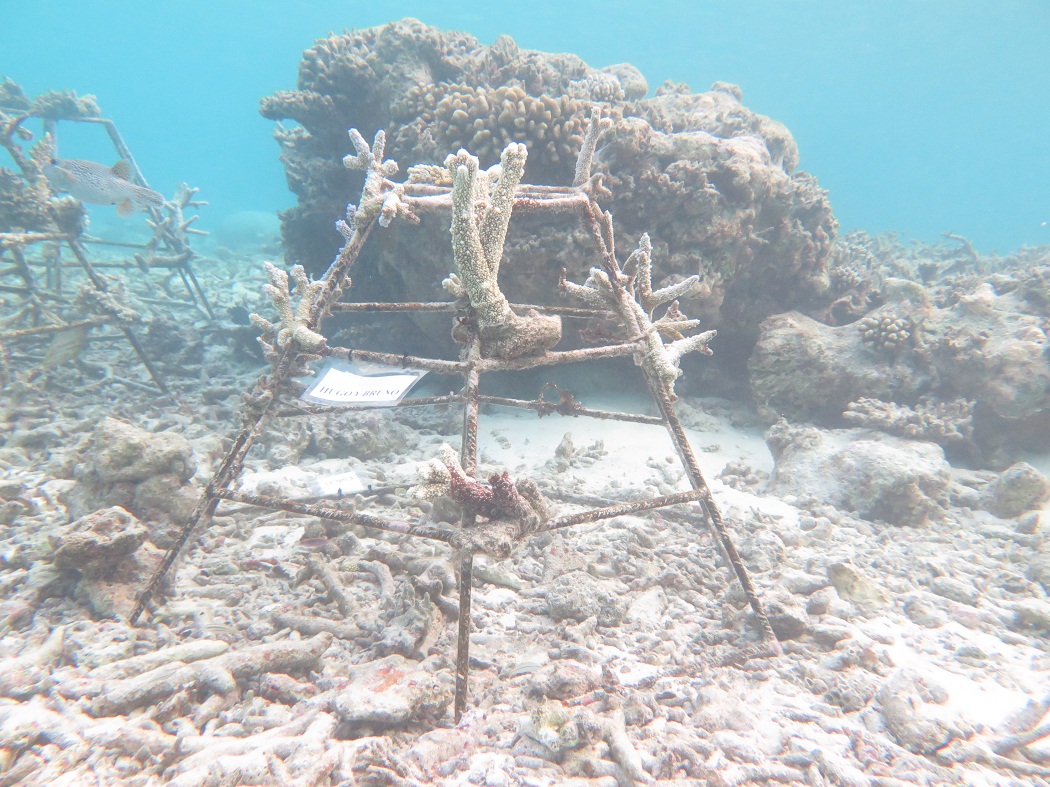
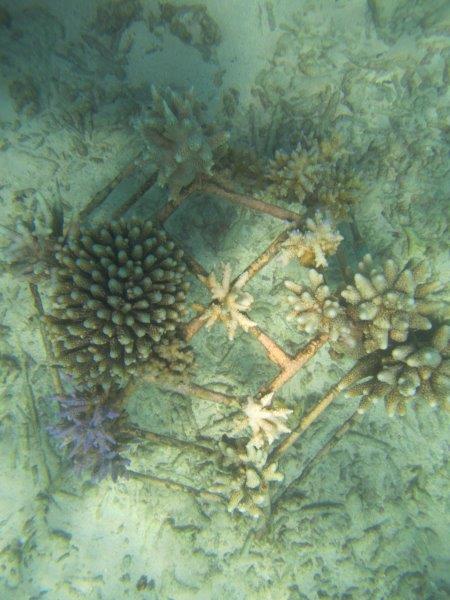
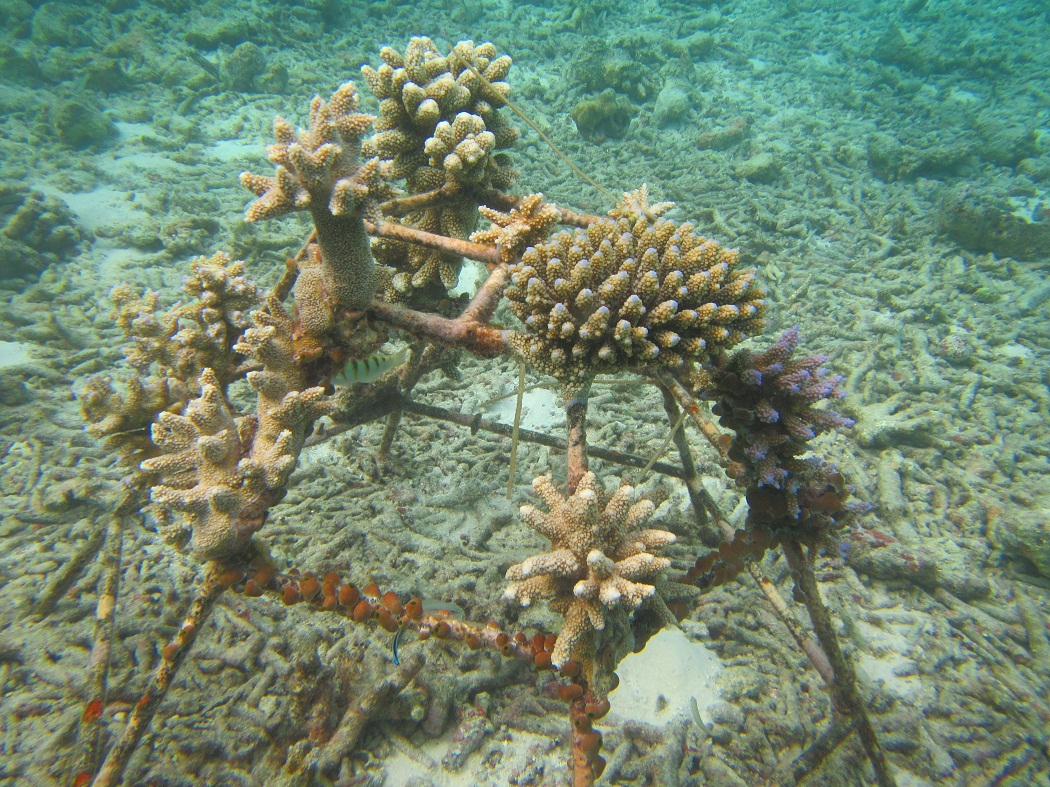
Thank you for signing up to keep in touch with the Coral Conservation Project. Pictured above, you will find your coral frame as it was few days after construction. Your personal page will allow you to see more regular updates and amazing facts about the corals and animals living on your frame. By now having all the updates on one page, seeing the progress of your frame will be much easier and convenient. If you want to satisfy your curiosity even more, you can take a look at our Marine Blog Life and videos from the Marine Lab Diary or connect with us for more information.
Here is the start of a healthy coral reef relationship!
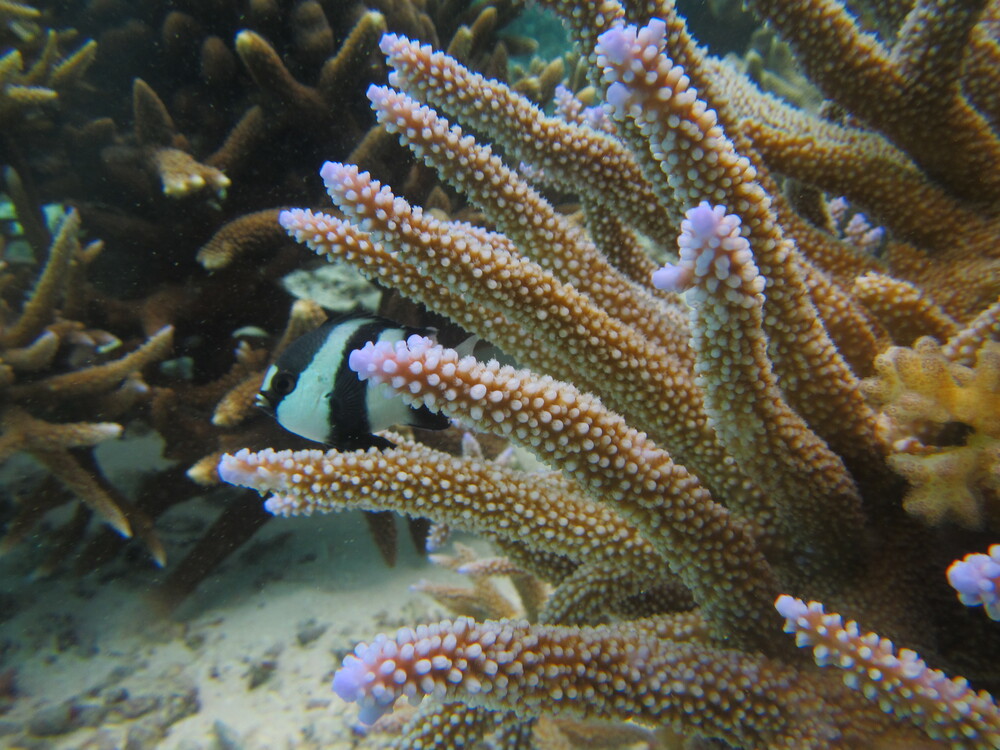
The Dascyllus aruanus, known commonly as humbug damselfish, has found in your coral frame its home. This particular fish is known by multiple common names, such as three stripe damselfish, humbug dascyllus, or black and white damselfish. They only reach an adult size of 3-4 inches (7.6-10 cm). Sporting three broad black stripes on a white body, the humbug damselfish has a zebra like appearance. The stripes run slightly off vertical through the eyes and mouth, midbody and bisecting the caudal peduncle, making it half black and half white. There are several contestants for the title of most important reef fish family, but the Damselfish are certainly one of the front-runners. Not only are there numerous species, but also many of these species are present on Maldivian reefs in prodigious numbers. The humbug damselfish that you can see in the picture is associated with isolated coral heads in sheltered inshore habitats. Like all damselfish, they can be territorial and aggressive, especially as they get older.
A fresh scar from a broken branch, the white indicate the calcium skeleton underneath that is produced by the tiny polys above year after year. Since collected fragments are picked up rather than broken down from existing colonies they often have dead sections covered with overgrowing algae and dead or damaged polyps, as such these sections are removed for faster recovery. You can already see the new polyps starting to grow along the bottom of the scar, soon the branch will regrow into its former state.
Relationships with beneficial consequences between different species such as mutualism or commensalism are common in the coral reefs. In this photo, we would like to show you an important association that has been recently discovered by the team of researchers from the University of Milan-Bicocca. It refers to tiny hairy-looking animals living on the surface of corals called Hydrozoans belonging to the genus Zanclea. Indeed, it seems that they have an important role for the protection of the corals since they also have powerful toxin that may represent a strong defense against predators.
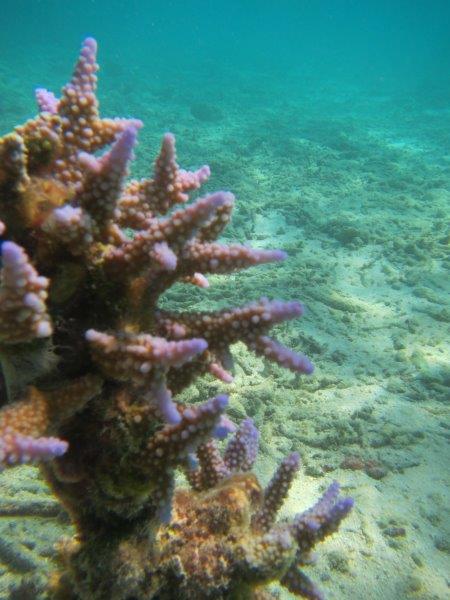
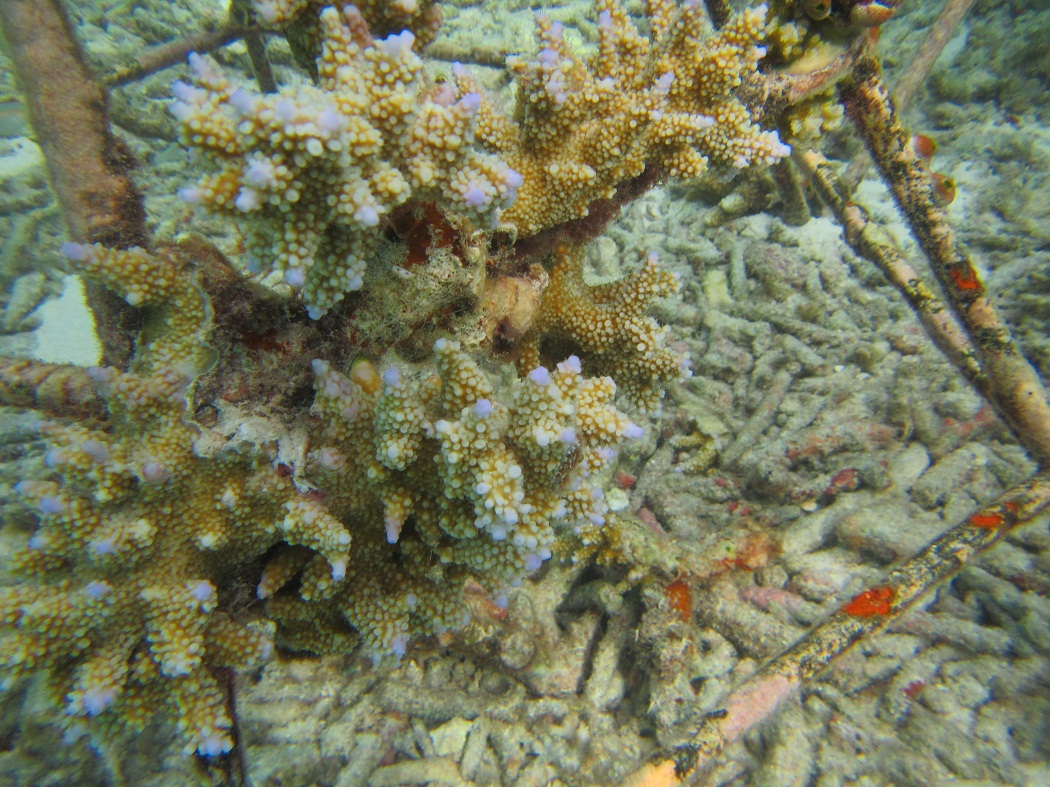
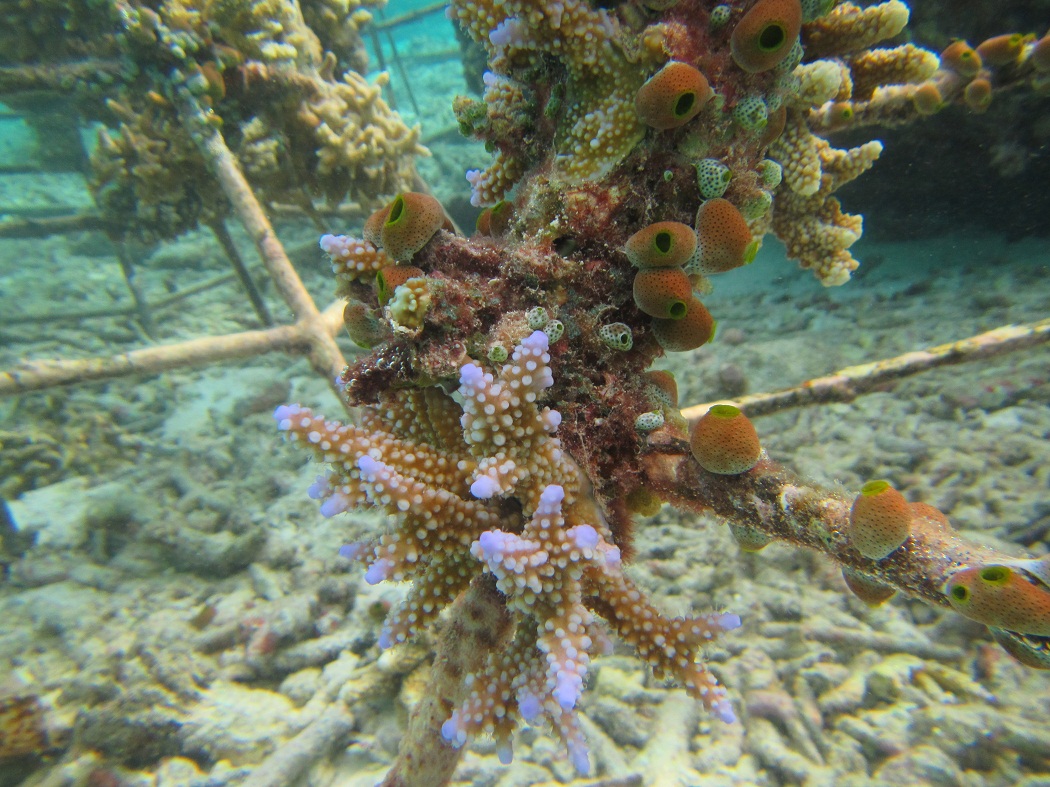
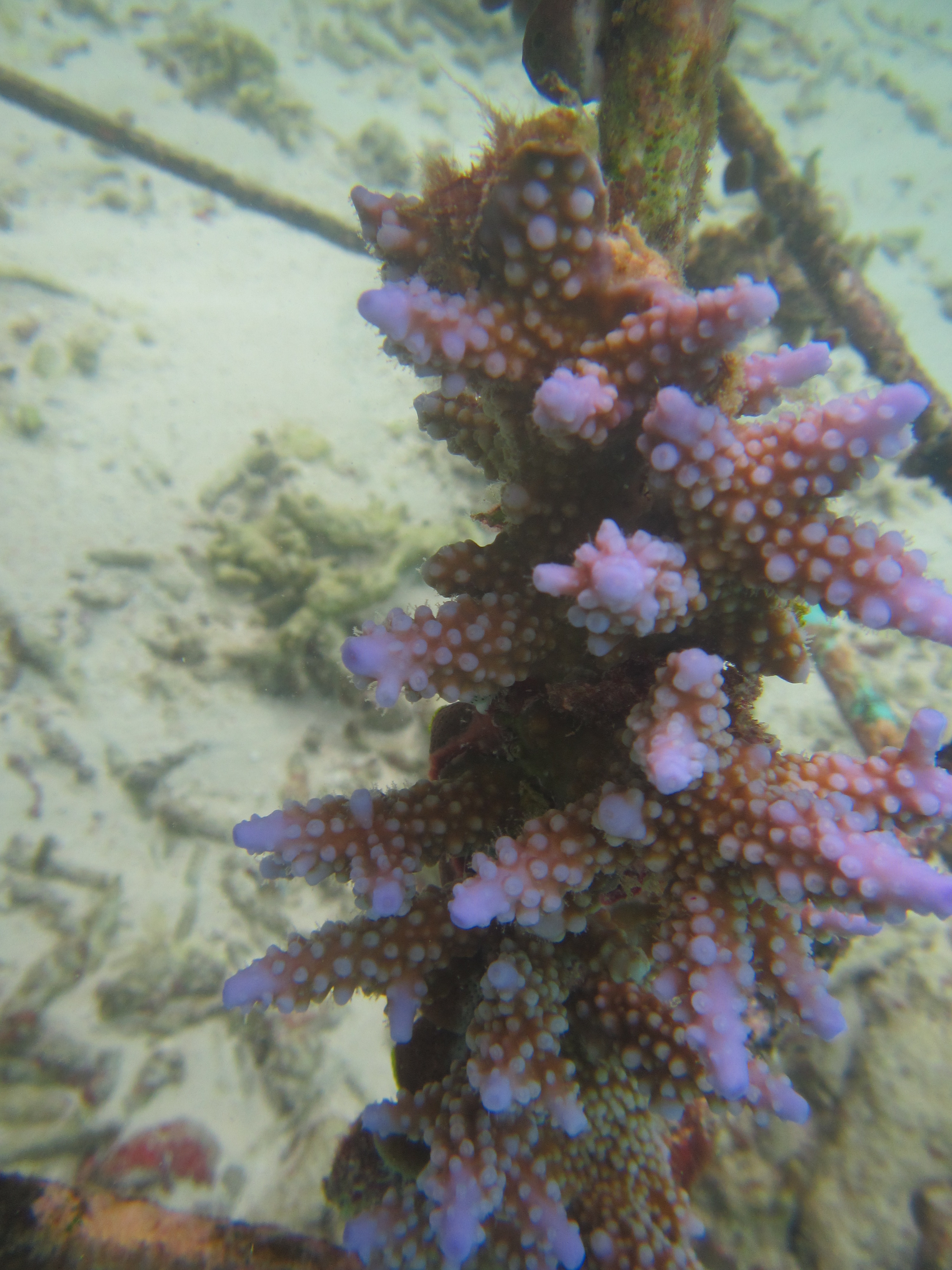
Have you ever wondered why some corals are more colorful than others… That is because some corals increase the production of colourful protein pigments (such as these purple tips) when they are exposed to more intense sunlight and this colony, of a branching Acropora, is simply amazing. Scientist have found that these pink, blue and/or purple proteins act as sunscreens for the corals by removing substantial light components that might otherwise become harmful to the algae hosted in their tissue. Corals rely on these light-dependent miniature plants, the so-called zooxanthellae, since they provide a substantial amount of food. Furthermore, these tips consist of a particular polyp called an “apical polyp”. It is responsible of the growth of the particular branch. For instance, it will reproduce asexually by cloning itself, potentially an infinite number of times throughout its lifetime. Here and there, one of the “radial polyps” will differentiate becoming a new apical polyp with its distinguished purple color, driving the growth of a new branch.
Do you know that even under the water we can found cobwebs? The responsible invertebrate responsible for this mesh is not a spider, but rather a gastropod mollusk called Ceraesignum maximum. As all Vermeidae, this mollusk species is sessile and houses themselves within tubular shells. They are common dwellers of shallow water in coral reefs and rocky shores. These nets are called mucus nets that can be expand around the individual up to 10 cm in diameter. Under wave action and currents allow suspended particles to be trapped in these sticky nets that are withdrawn at regular intervals for consumption.
This is your 6 month frame progress update. Your frame is doing fantastic!
Looking at your frame, we can see lots of new growth, especially of the acropora corals (the branching & fast growing corals). We can see some of the corals are competing for space, which is a good problem to have, it means your frame is thriving. We can also see that your frame is contributing to the overall health of the coral ecosystem. We see lots of life such as little fish, crabs, worms and mollusks around your frame. Overall your frame has survived the warm months of March, April and May just fine, unfortunately some of the other frames in our colony weren’t so lucky.
Over the following months we will continue with maintenance to keep harmful algae and predators off your frame and to give your frame the best chance for successful growth.
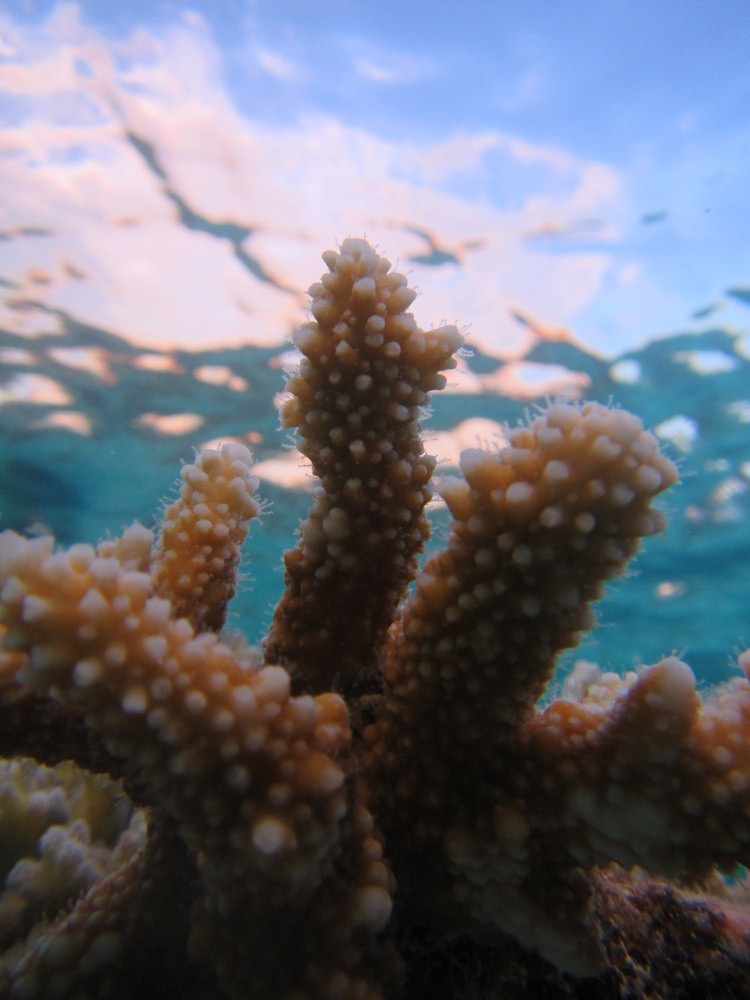
Acropora corals are among the most common genera of corals in tropical reefs with up to 150 species already described. Corals are composed of tiny individual polyps each that resemble an upside-down jellyfish with the mouth in the middle, surrounded by the tentacles. Here you can also see the tiny polyps in this picture (each tiny bump is a coral polyp). Furthermore, Acropora corals are called hexacorallia since each polyp has six, or multiples of six, tentacles. Such structures are used for hunting prey, microorganisms, but are also used for defense. These tentacles are armed with unicellular weapon needle-like structures composed with a strong mix of toxins. Humans are not harmed by these toxins but it may cause inflammation along with some itching if touched.
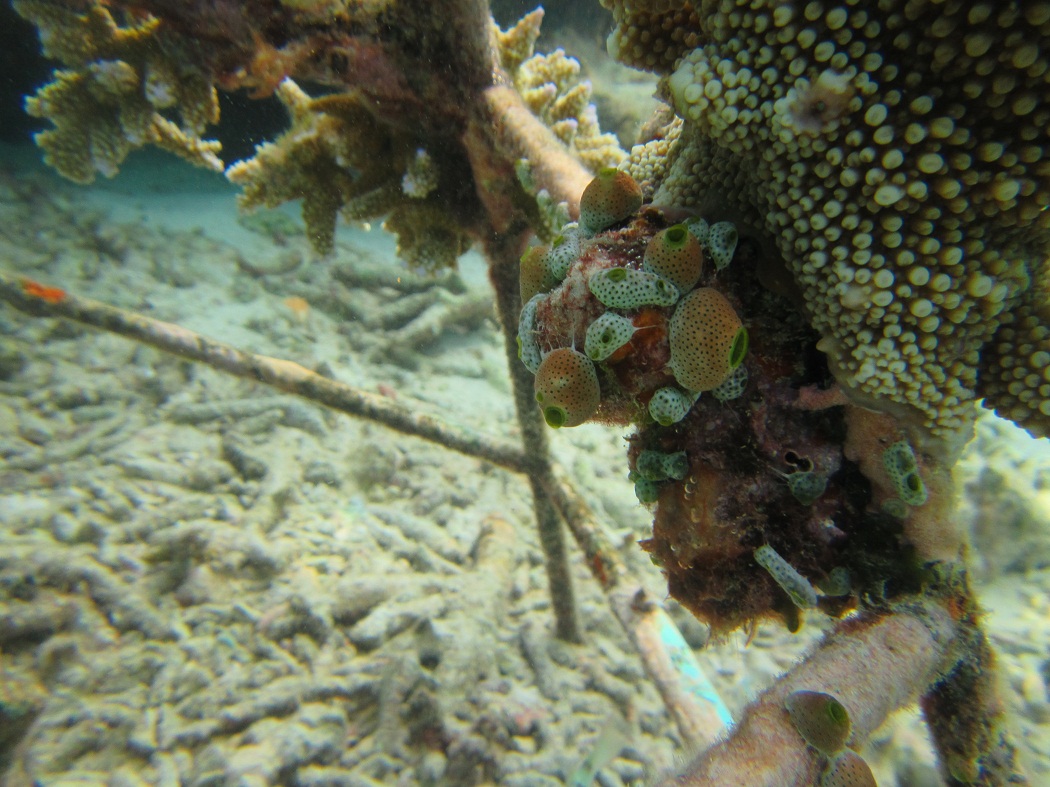
As you can see from the picture, your coral frame are colonized by some little, brown and green organisms called Ascidia. The species is called Didemnum molle (also known as the green barrel sea squirt or the green reef sea-squirt.) and is very common in the Indo-Pacific area. Ascidia is a filter-feeder, feeding on suspended plankton and detritus and its green color is given by the algae living in symbiosis with them, in this way the algae is protected by the predation and the Ascidia can receive energy from its little hosts. Luckily they don’t possess any threat to the corals when they are few in numbers, however they can colonize quite quickly on the frames through asexual budding, as such they are regularly removed to minimize competition with growing corals.
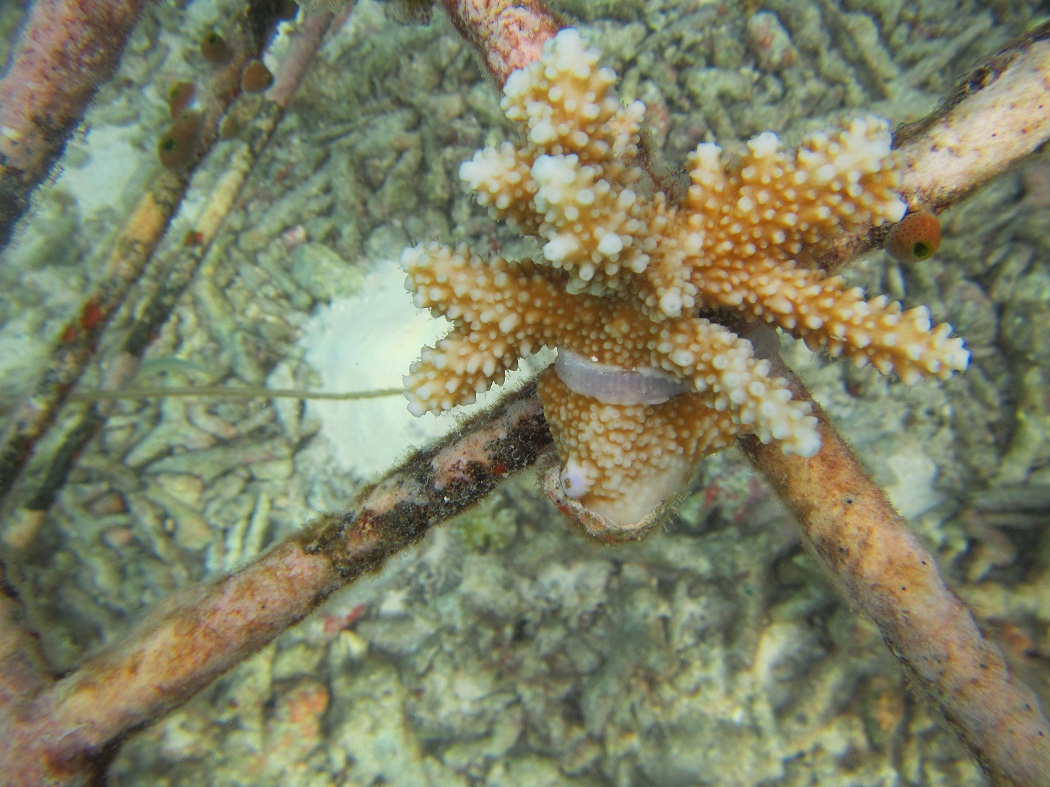
Coral reefs are one of the most diverse systems on the planet, and sometimes corals can be new substrate for sessile gastropods, such as Ceraesignum maximum or otherwise known as an Operculate Worm Snail (Vermetidae, Mollusca). Individuals of C. maximum live in tubes embedded in the carbonate framework of the reef flat and secrete mucus nets extending ~10 cm around the individuals. The sticky nets billow under the turbulent action of impinging waves and indiscriminately trap suspended particles. The nets are withdrawn at regular intervals and consumed. In the picture it is visible the aperture of the tube, on an Acropora living on your frame.
It is unfortunate to see that some coral frames are exposed to greater mortality compared to others mainly due to environmental factors, such as predation, high water temperature or diseases. Often times we see that broken fragments used for frame construction is not recovering due to prolonged stress from lying in the sediment and then exposed to the sun and human contact and as a result they slowly die and become covered with competing algae. In other cases, the fragments may also be heavily exposed to predation from a mollusk called Drupella spp. It is a corallivore species which feeds mainly on adult corals of Acropora genus. During our maintenance we remove the predators from the frames, although the result of their feeding is quite severe in some cases, in which case, the fragment is unlikely to survive. When we see a high number of dead fragments, we remove them completely and replace them with new ones.
We have noticed that some fragments such as this one pictured have some damage and as a result they die completely. This happens from time to time that fragments might receive very high stress levels due to increased water temperatures and they lose the symbiotic algae Zooxanthellae that they need to survive. Sometimes corals also need to compete with invasive algae that grow over the polyps and when this happens they will also die off. During the maintenance these pieces of dead coral is usually removed while the live part remains attached.
Looking at your frame, you will see that it is doing amazing and the corals are really growing well since the last update even after the heated months and some stormy weather. We have done some recent maintenance on all the frames which include cleaning them, removing the invasive algae and coral predators to maximize growth. In the upcoming post we will show you close-ups of your frame and the coral fragments, with some interesting facts and findings about those that are on your frame. After 6 months you will see a similar post showing once again the progress of your frame.
Zooxanthellae are symbiotic unicellular algae providing energy to the coral in exchange for protection. These microscopic algae capture sunlight and convert it into energy, just like plants, to provide essential nutrients to the corals. In exchange, they have a place to live inside the animal’s body. But when the zooxanthellae are under stress, such as high temperatures, they will die or leave their host—a process known as bleaching. When corals are exposed to more light than it is used to, it will increase the amount of proteins, and also the colors. The purple proteins as can be seen from the photo act as sunscreen for the corals by removing some components of the light, which may be harmful for the coral. Thus, in other words, humans get tanned …corals get more colorful!