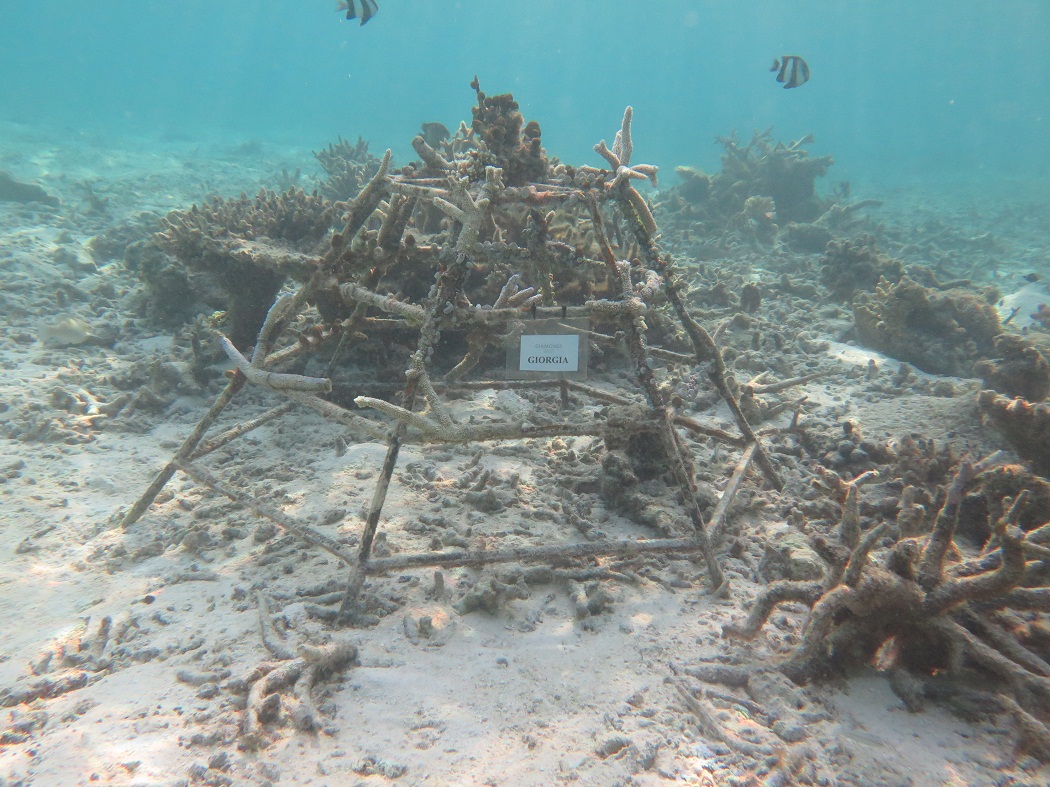
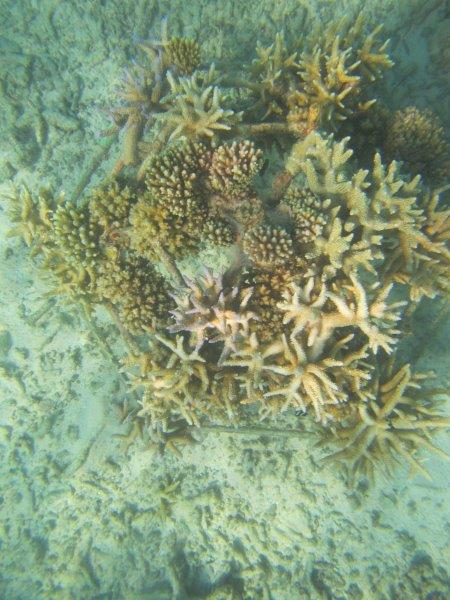
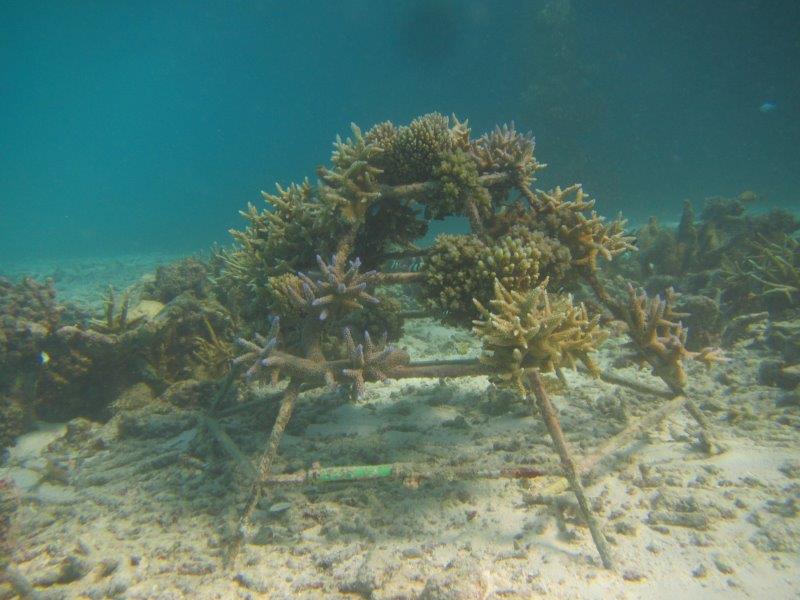
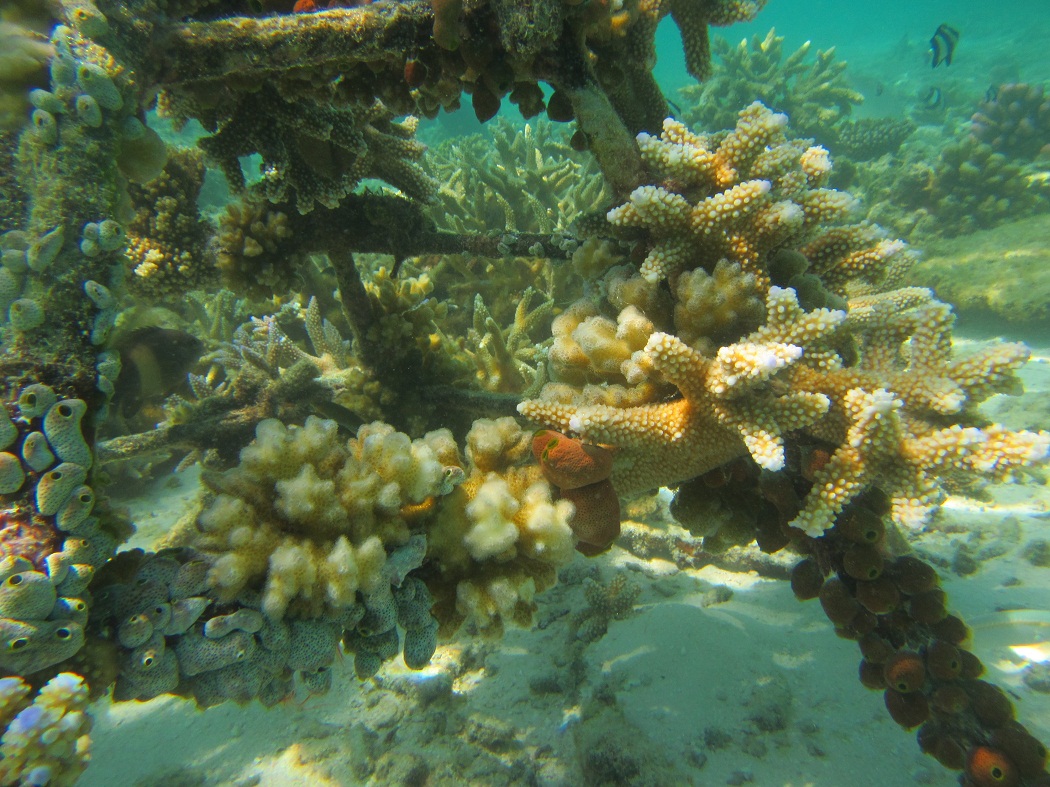
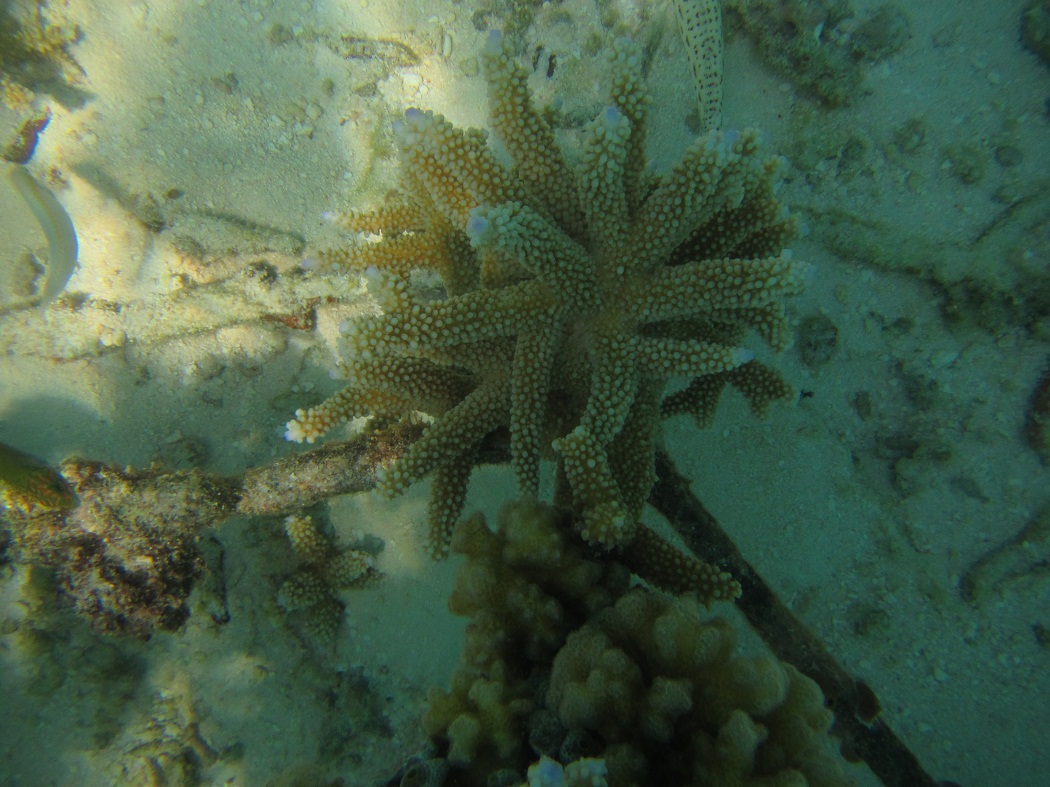
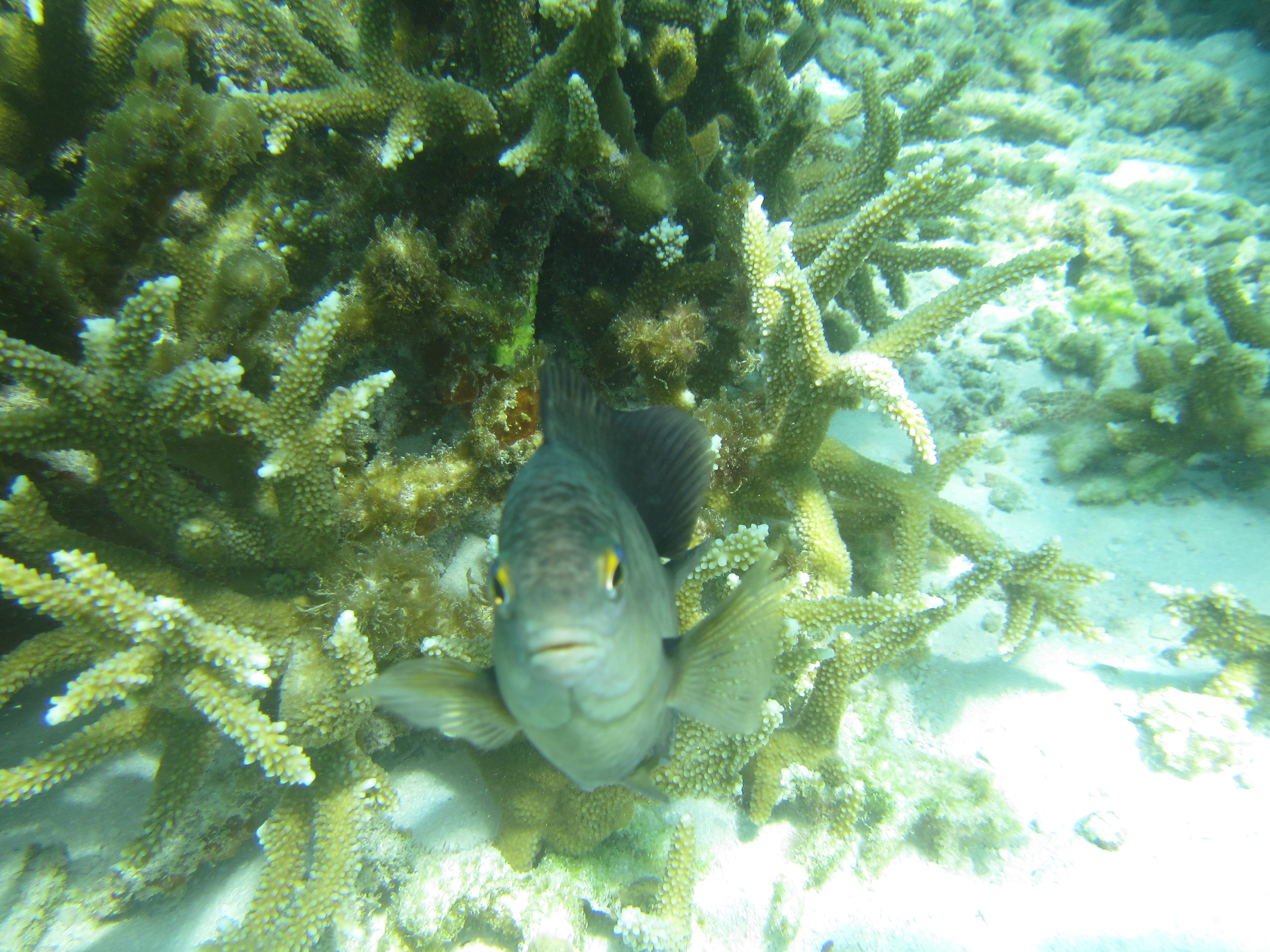
Thank you for signing up to keep in touch with the Coral Conservation Project. Pictured above, you will find your coral frame as it was few days after construction. Your personal page will allow you to see more regular updates and amazing facts about the corals and animals living on your frame. By now having all the updates on one page, seeing the progress of your frame will be much easier and convenient. If you want to satisfy your curiosity even more, you can take a look at our Marine Blog Life and videos from the Marine Lab Diary or connect with us for more information.
Here is the start of a healthy coral reef relationship!
The Dascyllus aruanus, known commonly as humbug damselfish, has found in your coral frame its home. This particular fish is known by multiple common names, such as three stripe damselfish, humbug dascyllus, or black and white damselfish. They only reach an adult size of 3-4 inches (7.6-10 cm). Sporting three broad black stripes on a white body, the humbug damselfish has a zebra like appearance. The stripes run slightly off vertical through the eyes and mouth, midbody and bisecting the caudal peduncle, making it half black and half white. There are several contestants for the title of most important reef fish family, but the Damselfish are certainly one of the front-runners. Not only are there numerous species, but also many of these species are present on Maldivian reefs in prodigious numbers. The humbug damselfish that you can see in the picture is associated with isolated coral heads in sheltered inshore habitats. Like all damselfish, they can be territorial and aggressive, especially as they get older.
Looking at your frame, you will see that it is doing amazing and the corals are really growing well since the last update even after the heated months and some stormy weather. We have done some recent maintenance on all the frames which include cleaning them, removing the invasive algae and coral predators to maximize growth. In the upcoming post we will show you close-ups of your frame and the coral fragments, with some interesting facts and findings about those that are on your frame. After 6 months you will see a similar post showing once again the progress of your frame.
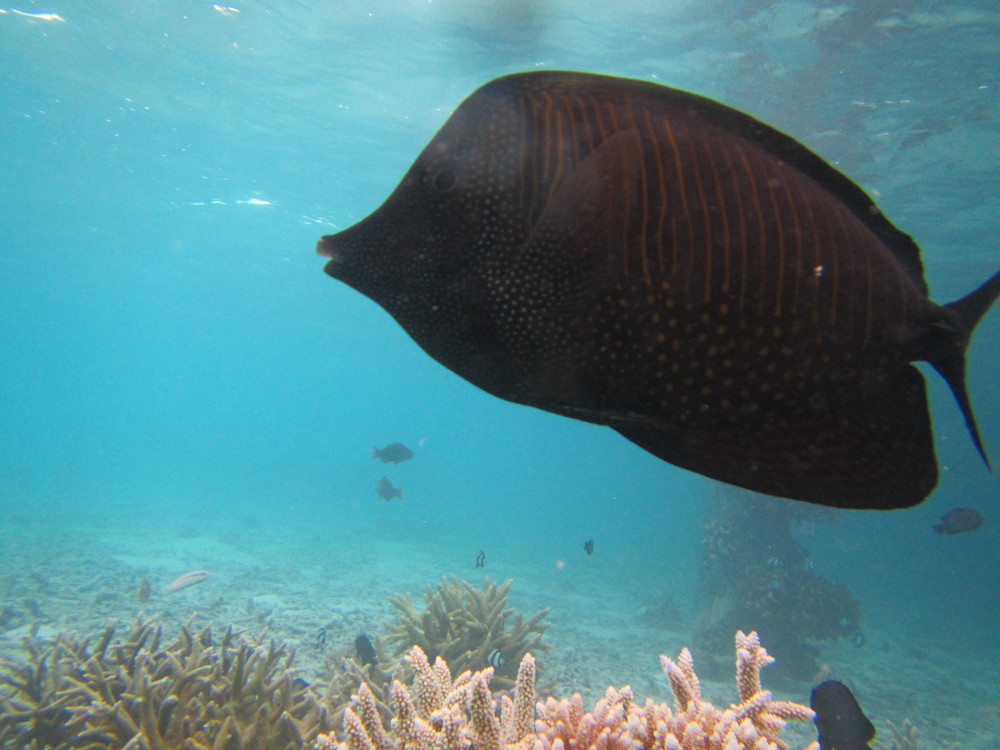
In your framework we find another super guest: the sailfin tang (Zebrasoma veliferum). It is a marine reef tang in the fish family Acanthuridae. They may live at water depths of 1 – 60 m (3 – 200 ft) or more. The fish grow to a maximum length of 40 cm (15.8 in). It has an extensive range throughout Oceania, the Indian Ocean, and the South Pacific. They are herbivorous fish specializing in filamentous algae. Though their skin is light beige with stripes, it can turn dark brown under stress. The sailfin tang is decorated with broad, pale yellow bands that alternate with darker bands over its body. The bending extends into both dorsal and anal fins. On the darker bands are yellow dots and stripes. The caudal fin is yellow. The head of the fish is white adorned with yellow dots. A dark band with yellow dots runs across the eye and another dark band with dots is located right behind the eye. Juvenile specimens look similar to the adult fish, but with more yellow colouring.
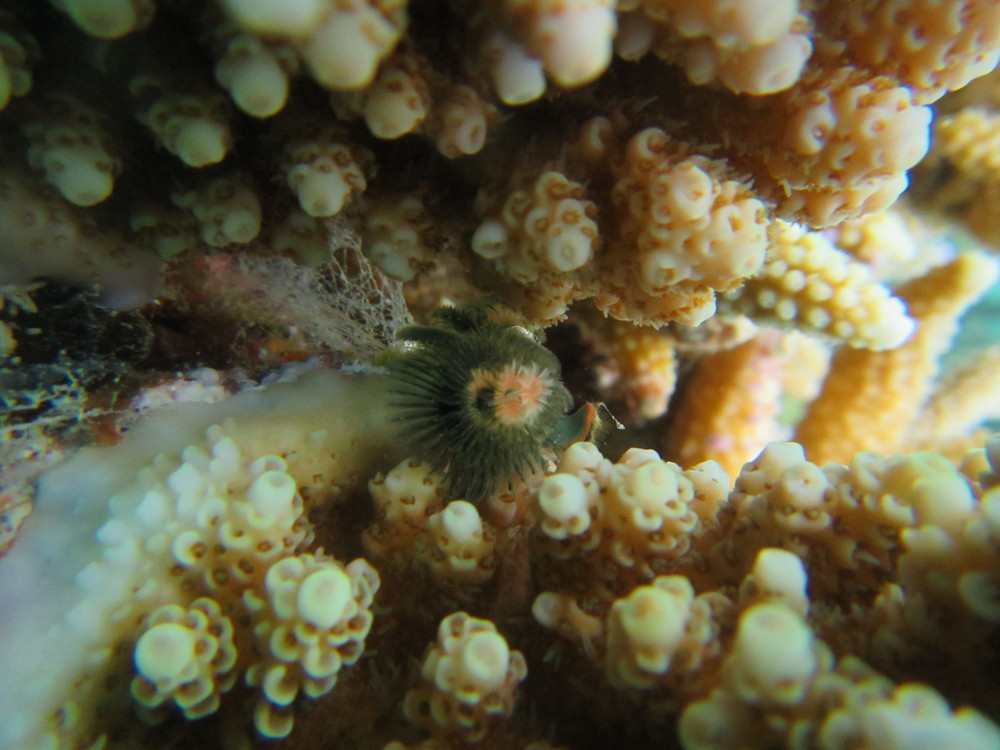
Just look at this amazing creature that lives on your frame. This is Christmas tree worm (Spirobranchus giganteus), a species that belongs to the tube-building polychaete worms. Its name refers to the two chromatically hued spiral structures that we can see here in the image. These multicolored spirals are highly modified structures for feeding and respiration and can also be various colors. They are known to occur throughout tropical oceans and commonly found embedded entirely in heads of massive corals, such as stony and brain corals but not unusual to find them in Acropora corals such as these. Similar to other members of this family, they secrete a calcareous tube around its body which serves as protection. When danger is close, it will retract into these tubes and only come out again after a few minutes. This worm luckily didn’t seem to mind that I was taking this beautiful picture.
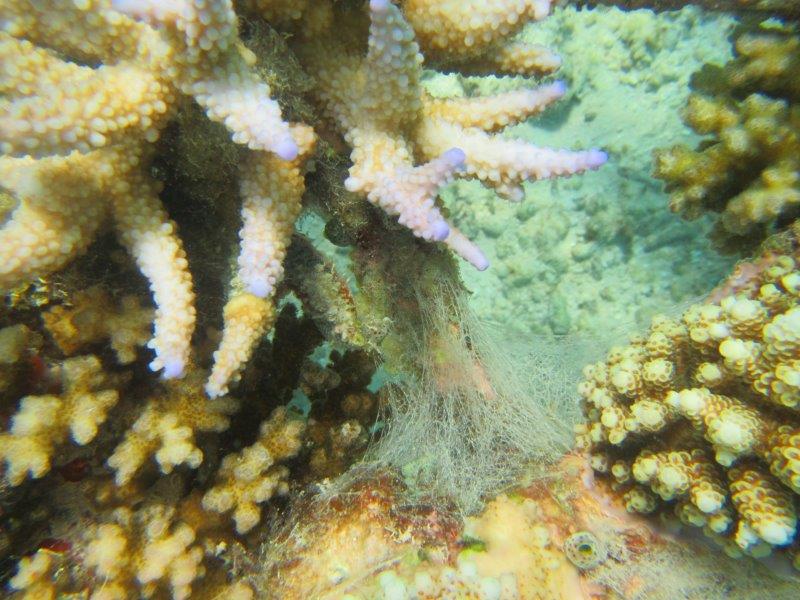
Do you know that even under the water we can find cobwebs? The invertebrate responsible for this mesh is not a spider, but rather a gastropod mollusk called Ceraesignum maximum. As all Vermeidae, this mollusk species is sessile and houses themselves within tubular shells. They are common dwellers of shallow water in coral reefs and rocky shores. These nets are called mucus nets that can expand around the individual up to 10 cm in diameter. Waves and currents fill the net with tiny particles. After a few hours the mollusk will inhale the net with all of its yummy goods caught inside.
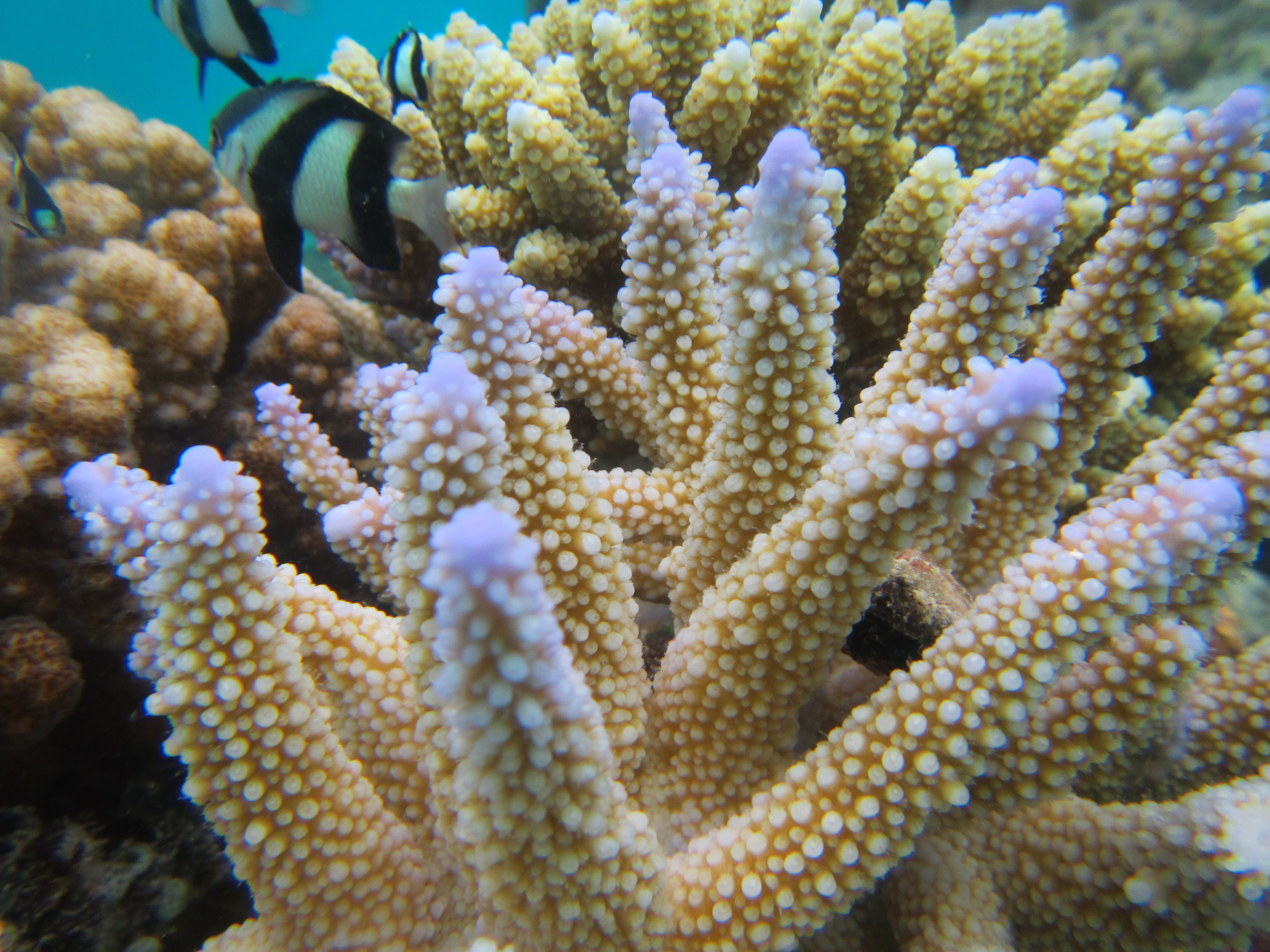
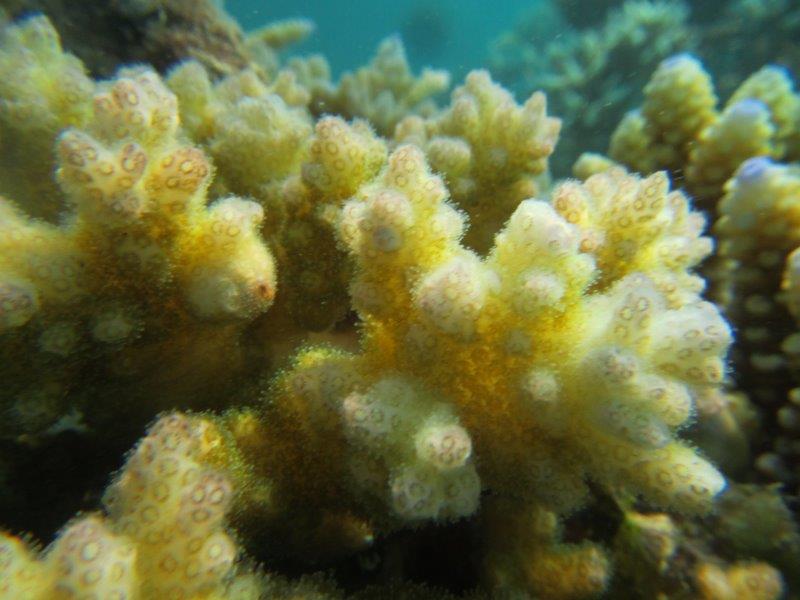
Have you ever wondered how corals are eating and defending themself… here you will see some small extensions/tentacles protruding from each of the polyp housings. They are referred to as the defensive/offensive stinging mechanisms similar to sweeper tentacles and are often linked to their feeding and defending. Inside each of the polyps are the small animal that look similar to an upside-down jellyfish with tentacles that surrounds the mouth part, depending on the coral species, the amount of tentacles may vary. They will move around to collect anything that passes around in the water, usually small plankton where after they will maneuver it towards their mouth where the food will digested and passed down. These tentacles are also used for defending themselves against predators such as the coral eating snail, Drupella sp or the invasive Crown of Thorns Starfish. They also keep the smaller predators such as crabs or invertebrates away. These tentacles are seldom seen but do come out when they are feeling threatened or when they are feeding.
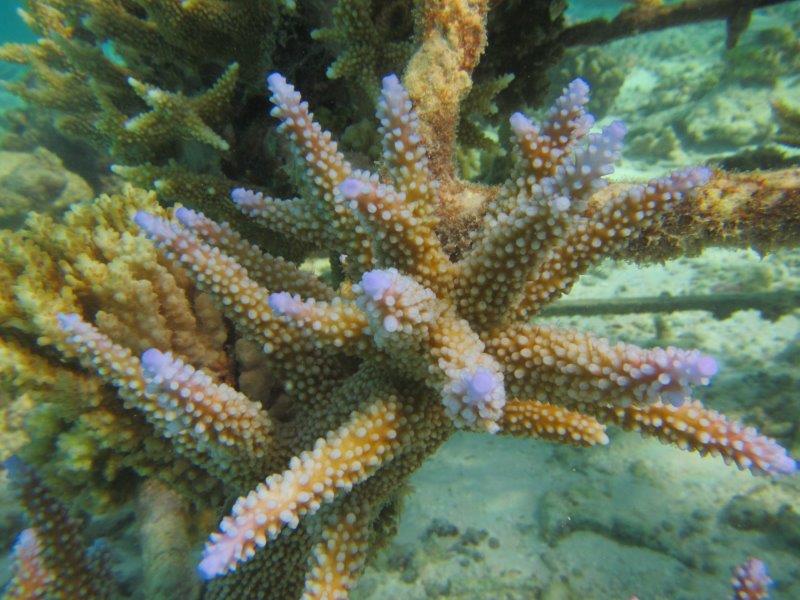
Have you ever wondered why some corals are more colorful than others… That is because some corals increase the production of colourful protein pigments (such as these purple tips) when they are exposed to more intense sunlight and this colony, of a branching Acropora, is simply amazing. Scientist have found that these pink, blue and/or purple proteins act as sunscreens for the corals by removing substantial light components that might otherwise become harmful to the algae hosted in their tissue. Corals rely on these light-dependent miniature plants, the so-called zooxanthellae, since they provide a substantial amount of food. Furthermore, these tips consist of a particular polyp called an “apical polyp”. It is responsible of the growth of the particular branch. For instance, it will reproduce asexually by cloning itself, potentially an infinite number of times throughout its lifetime. Here and there, one of the “radial polyps” will differentiate becoming a new apical polyp with its distinguished purple color, driving the growth of a new branch.
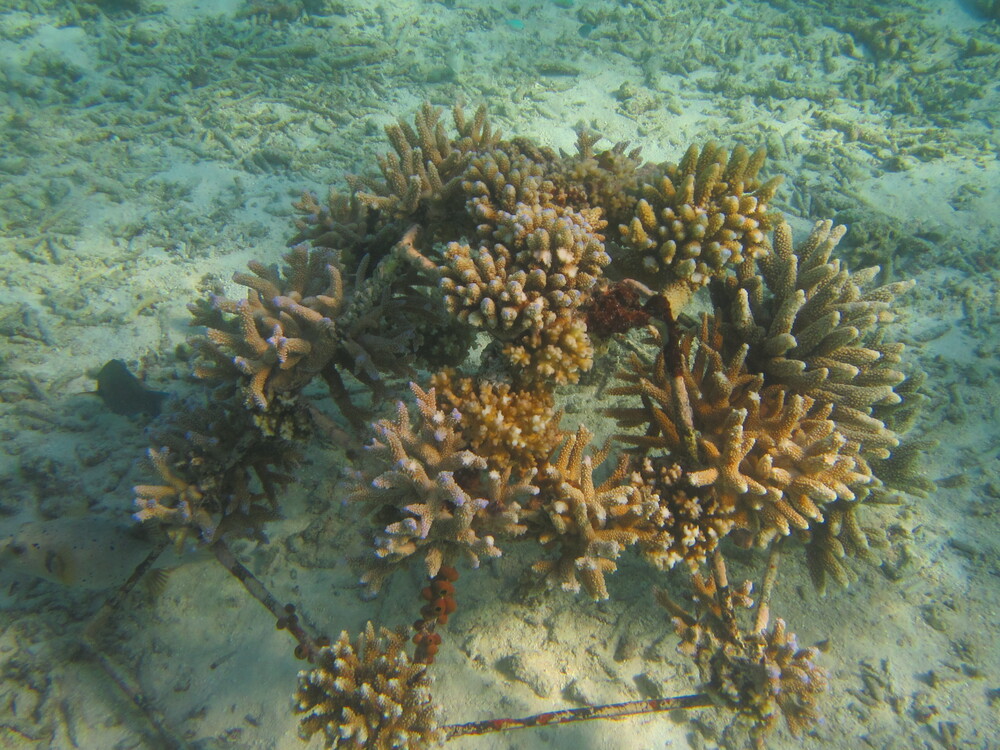
This is your 6 month frame progress update. Your frame is doing fantastic!
Looking at your frame, we can see lots of new growth, especially of the acropora corals (the branching & fast growing corals). We can see some of the corals are competing for space, which is a good problem to have, it means your frame is thriving. We can also see that your frame is contributing to the overall health of the coral ecosystem. We see lots of life such as little fish, crabs, worms and mollusks around your frame. Overall your frame has survived the warm months of March, April and May just fine, unfortunately some of the other frames in our colony weren’t so lucky.
Over the following months we will continue with maintenance to keep harmful algae and predators off your frame and to give your frame the best chance for successful growth.
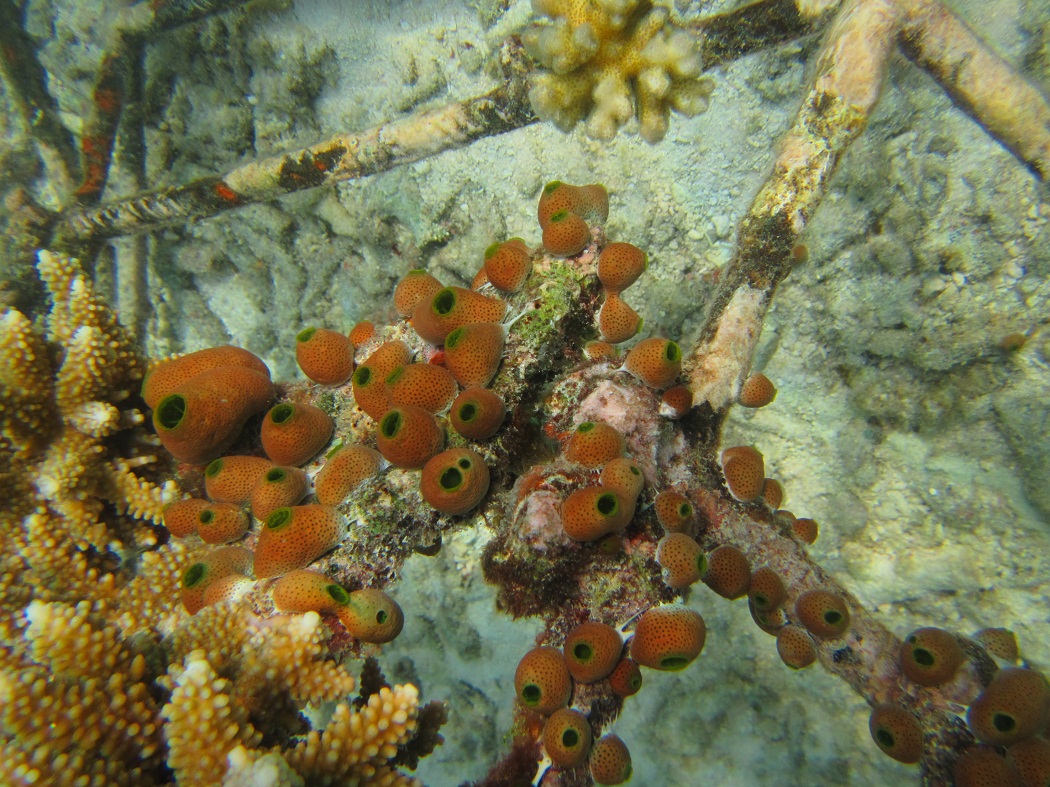
As you can see from the picture, your coral frame are colonized by some little, brown and green organisms called Ascidia. The species is called Didemnum molle (also known as the green barrel sea squirt or the green reef sea-squirt.) and is very common in the Indo-Pacific area. Ascidia is a filter-feeder, feeding on suspended plankton and detritus and its green color is given by the algae living in symbiosis with them, in this way the algae is protected by the predation and the Ascidia can receive energy from its little hosts. Luckily they don’t possess any threat to the corals when they are few in numbers, however they can colonize quite quickly on the frames through asexual budding, as such they are regularly removed to minimize competition with growing corals.
New research by the University of Southampton revealed corals utilize pink and purple hues as protective sunscreen from damaging sunlight. Many reef corals require light to survive, however, in the shallow water of coral reefs, light levels are often higher than required. As such, the high light intensity activates the genes responsible for the production of the sun screening chromoproteins. Some corals accumulate exceptionally high amounts of chromoproteins in growing areas such as branch tips or in the vicinity of healing wounds because these proteins might help the symbiotic algae enter the new tissue.
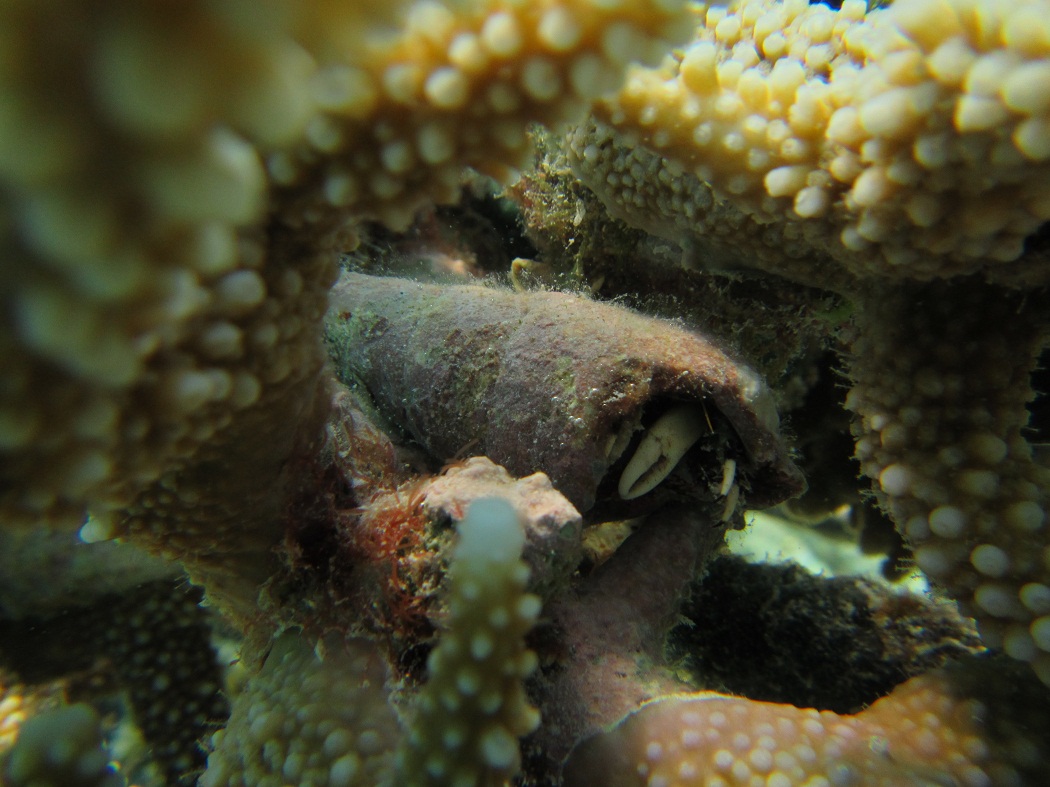
Check out this intriguing creature we found on your coral frame… this is called a hermit crab, one of the 1110 species found today, so we cannot be too sure about the specific species. These specific groups of animals are called marine hermit crabs and they spend most of their life underwater. Most species have long, spirally curved abdomens which are soft, unlike their calcified relatives. This soft abdomen is protected from predators by a salvaged empty seashells usually abandoned by other gastropods. Often times they will use the shells of sea snails or other hermit crabs. Like all hermit crabs, as they grow bigger, they require bigger shells and often times when resources are limited there can be some competition between crabs for new shells. Their diets consist of algae and plankton but they are also omnivorous and depend on a reasonable amount of scavenging. They find the easiest ways to collect the plankton is by utilizing their claws to guide food into their mouths and suck in anything that is within reach.
How do corals grow bigger? Coral reefs are mainly built by stony or hard corals, together with their endosymbiotic algae (algae living into the corals), zooxanthellae. To give you some information on how the calcification process works. The main elements needed to build the skeleton are Ca2+ (Calcium ions) and DIC (Dissolved Inorganic Carbon). Both these elements are transported into a specific area of the coral called the “calcifying region”, which is situated under each single polyp. Here, the calcium carbonate (CaCO3) is formed throughout a chemical reaction. Finally, the calcium carbonate (or technically crystals of aragonite) is deposited to form the skeleton. The process involves the polyp’s cells and the zooxanthellae and by the mutualistic work of these two counterparts the skeleton is formed. However, if for any reasons (i.e. high temperature) one of the two parts is not working properly the process stops and the coral may die.
Acropora corals are among the most common genera of corlas in tropical reefs. Corals are composed of tiny individual polyps each that resembles an upside-down jellyfish with the mouth in the middle, surrounded by the tentacles. Here you can appreciate the tiny polyps in this picture. Furthermore, Acropora corals are called hexacorallia since each polyp has six, or multiples of six, tentacles. Such structures are used for hunting prey, microorganisms, but also used for defence. These tentacles are armed with unicellular weapon needle-like composed with a strong mix of toxins. Humans are not harmed by these toxins but it may cause inflammation along with some itching if touched.
As a marine biologist working in this coral conservation project I was not expected to learn how protect myself from fishes. In this photo there is a species of damselfish (Pomacentrus sp.) in attack position. All the damselfish species are well known to be territorial herbivores that aggressively chase other fishes away from their ‘home’. They have an important ecologic role since they protect coral colonies from parrotfish’s predations. Moreover, Damselfishes are very brave, attacking everything gets close to them, including us!